Ophthalmologist Yorkshire: Expert Eye Care Near You
Finding a trusted ophthalmologist in Yorkshire is crucial for maintaining optimal vision and eye health throughout your life. Whether you’re experiencing vision problems, require specialist treatment for conditions like cataracts or glaucoma, or need expert surgical care for eyelid concerns, choosing the right consultant ophthalmologist makes all the difference to your outcomes and experience. At The Eye Dr Clinic in West Yorkshire, Mr Mohamed Mohyudin provides comprehensive, patient-centred ophthalmic care using the latest 2026 diagnostic technology and treatment protocols.
An ophthalmologist Yorkshire practices is a medically qualified doctor (consultant) specialising in diagnosis, treatment, and surgical management of all eye conditions and diseases. Mr Mohamed Mohyudin (MBChB BSc MSc FRCOphth CCT) at The Eye Dr Clinic in Elland, Halifax, offers expert care for cataracts, blepharoplasty, eyelid malposition, watery eyes, squint surgery, glaucoma, and eye infections. Same-day emergency appointments available. Cost: £150-£200 consultation, surgical procedures £2,800-£6,500 depending on treatment. Serving Halifax, Huddersfield, Bradford, Leeds, Wakefield across Yorkshire. Book within 1-2 weeks.
What Is an Ophthalmologist?
An ophthalmologist, also known as a consultant ophthalmic surgeon, is a fully qualified medical doctor who specialises exclusively in the diagnosis, treatment, and surgical management of eye conditions and diseases. This medical specialty requires extensive training beyond standard medical school, making ophthalmologists the most highly qualified eye care professionals.
Ophthalmologist vs Optometrist: Understanding the Difference
Many people confuse these two professions, but they serve distinctly different roles in eye care:
Optometrist (Optician):
- Performs routine eye examinations and vision tests
- Prescribes and dispenses glasses and contact lenses
- Detects common eye diseases and refers to ophthalmologists
- Typically 3-4 years of university training
- Cannot perform surgery or prescribe most medications
- Primary care for routine vision needs
Ophthalmologist (Medical Doctor):
- Completes 5-6 years of medical school plus 7+ years specialist training
- Registered medical doctor with General Medical Council (GMC)
- Diagnoses and treats all eye diseases and conditions
- Performs complex eye surgery (cataracts, glaucoma, retinal procedures, eyelid surgery)
- Prescribes all eye medications including controlled drugs
- Manages medical and surgical eye emergencies
- Provides specialist care for complex conditions
Think of it this way: an optometrist is like your general practitioner for eyes, whilst an ophthalmologist Yorkshire is the specialist consultant you see for complex problems, surgery, or serious eye disease.
Essential Qualifications to Look For
When selecting an ophthalmologist in Yorkshire, ensure they hold these crucial qualifications:
Medical Degree:
- MBChB, MBBS, or equivalent medical degree
- Confirms they are a qualified doctor
Specialist Registration:
- GMC registration with specialist register in Ophthalmology
- Verifies legal right to practise as consultant
Fellowship:
- FRCOphth (Fellowship of Royal College of Ophthalmologists)
- Demonstrates completion of rigorous specialist examinations
- Equivalent to board certification in other countries
Certificate of Completion of Training:
- CCT in Ophthalmology
- Confirms completion of full 7-year specialist training programme
- Required for consultant-level appointments
Consultant Appointment:
- Consultant post at NHS or private hospital
- Indicates senior, experienced surgeon
Mr Mohamed Mohyudin holds all these qualifications (MBChB BSc MSc FRCOphth CCT), ensuring you receive care from a fully qualified, experienced consultant ophthalmologist registered with the GMC.
Comprehensive Services: What Can an Ophthalmologist Treat?
A consultant ophthalmologist diagnoses and treats the complete spectrum of eye conditions, from routine refractive errors to complex surgical cases requiring specialist expertise.
Cataract Surgery and Premium Lens Options
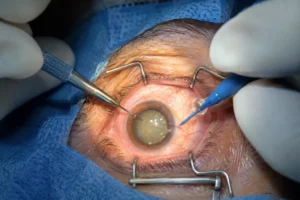
Cataract surgery Yorkshire is one of the most common procedures ophthalmologists perform. Mr Mohyudin specialises in modern phacoemulsification cataract surgery using 2026’s most advanced techniques.
Services Include:
- Comprehensive pre-operative assessment with advanced biometry
- Small-incision phacoemulsification (2-3mm, typically no stitches)
- Premium intraocular lens options (monofocal, toric, multifocal, EDOF, Light Adjustable Lens)
- Complex cataract cases including dense cataracts and previous eye surgery
- Same-day bilateral surgery when appropriate
- Complete post-operative care and monitoring
Typical Timeline:
- Consultation to surgery: 1-2 weeks
- Procedure duration: 15-20 minutes per eye
- Recovery: 4-6 weeks to final results
- Vision improvement: Within 24-48 hours
Cost: £2,800-£6,500 per eye depending on lens choice
Many patients develop posterior capsule opacification (PCO) months or years after successful cataract surgery. Mr Mohyudin treats this easily with YAG laser capsulotomy—a quick, painless 5-minute procedure restoring clear vision.
Learn more about Premium Lens Options During Cataract Surgery to explore which IOL best suits your lifestyle.
Oculoplastic and Eyelid Surgery
As a specialist ophthalmologist with expertise in oculoplastic procedures, Mr Mohyudin offers comprehensive eyelid surgery addressing both functional and aesthetic concerns.
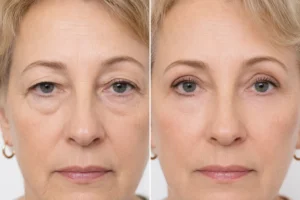
Blepharoplasty (Eyelid Lift Surgery): Blepharoplasty surgery removes excess skin, fat, and muscle from upper or lower eyelids to restore a youthful appearance and improve vision when drooping eyelids obstruct sight.
- Upper eyelid blepharoplasty: Addresses hooded, sagging eyelids affecting vision and appearance
- Lower eyelid blepharoplasty: Reduces under-eye bags, puffiness, and wrinkles
- Transconjunctival approach: Scarless technique for fat removal
- Combination procedures: Both upper and lower for comprehensive rejuvenation
Recovery: 7-10 days to return to normal activities, final results in 2-3 months
Cost: £2,500-£6,000 depending on extent
Eyelid Malposition Correction: Eyelids that don’t position properly cause discomfort, tearing, and potential vision problems.
- Ectropion surgery: Corrects outward-turning eyelid causing constant watering and irritation
- Entropion repair: Addresses inward-turning eyelid where eyelashes rub cornea
- Ptosis surgery: Lifts drooping upper eyelid obstructing vision
Eyelid Cyst Removal: Eyelid cyst surgery removes persistent chalazions (blocked oil glands) that don’t respond to conservative treatment.
- Quick 10-15 minute procedure under local anaesthetic
- Incision made inside eyelid (no external scar)
- Immediate relief from discomfort and cosmetic concerns
Watery Eyes (Epiphora) Treatment: Persistently watery eyes significantly impact quality of life. Treatment depends on the underlying cause:
- Conservative management: Warm compresses, massage, medication
- Punctoplasty: Widening narrow tear drainage openings
- DCR surgery: Creating new drainage pathway for blocked tear ducts
- Eyelid position correction: When malposition causes tearing
Squint Surgery (Strabismus Correction)
Squint surgery Yorkshire corrects misaligned eyes affecting children and adults. This precise procedure adjusts eye muscles to restore proper alignment.
Benefits:
- Improved eye alignment and binocular vision
- Enhanced depth perception
- Elimination of double vision in adults
- Prevents or treats amblyopia (lazy eye) in children
- Significant boost to self-confidence and social interactions
Performed on:
- Children from 4 months onwards
- Adults with childhood squints or new-onset misalignment
- Patients who’ve had previous squint surgery requiring adjustment
Recovery: 1-2 weeks to normal activities, 6-8 weeks to final alignment
Eye Infection Treatment
Eye infections require prompt, expert evaluation to prevent complications and preserve vision. As an ophthalmologist in Yorkshire, Mr Mohyudin treats all types of ocular infections.
Common Infections Treated:
- Conjunctivitis (pink eye): Bacterial, viral, or allergic—rapid diagnosis and targeted treatment
- Keratitis: Serious corneal infection requiring urgent specialist care
- Blepharitis: Chronic eyelid margin inflammation
- Styes and chalazions: Infected oil glands
- Orbital cellulitis: Emergency condition requiring immediate treatment
- Endophthalmitis: Rare internal eye infection following surgery or injury
Treatment Options:
- Culture-guided antibiotic therapy using latest-generation medications (moxifloxacin, azithromycin)
- Antiviral, antifungal, or anti-parasitic treatments for complex infections
- Surgical intervention when medical management insufficient
- Same-day emergency appointments for severe symptoms
- Advanced diagnostic testing (PCR, confocal microscopy) for resistant cases
Glaucoma Diagnosis and Management
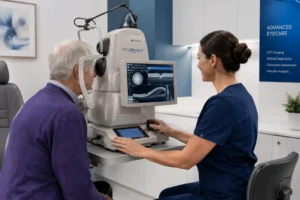
Glaucoma is a group of conditions causing optic nerve damage, typically from elevated eye pressure. Early detection and treatment prevent irreversible vision loss.
Comprehensive Glaucoma Care:
- Visual field testing to monitor peripheral vision
- Intraocular pressure measurement
- Optic nerve assessment with OCT imaging
- Medical management with latest eye drop medications
- Laser treatments (selective laser trabeculoplasty, peripheral iridotomy)
- Surgical options for advanced or uncontrolled cases
- Ongoing monitoring and adjustment of treatment
Risk Factors:
- Age over 60
- Family history of glaucoma
- Afro-Caribbean or Asian ethnicity
- High myopia (short-sightedness)
- Diabetes
- Previous eye injuries
Annual screening recommended for at-risk individuals.
Additional Eye Conditions Treated
Dry Eye Disease: Comprehensive management including meibomian gland dysfunction treatment, punctal plugs to conserve tears, prescription drops (ciclosporin, lifitegrast), and intense pulsed light (IPL) therapy for advanced cases.
Diabetic Eye Disease: Diabetic retinopathy screening and monitoring, laser photocoagulation when needed, coordination with retinal specialists for advanced cases, and annual examinations for all diabetic patients.
Pterygium and Pinguecula: Monitoring of benign growths and surgical removal when affecting vision or causing significant irritation.
Floaters and Flashes: Urgent assessment to rule out retinal tears or detachment and reassurance and monitoring for benign causes.
State-of-the-Art Diagnostic Technology
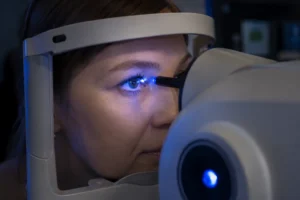
As a leading ophthalmologist Yorkshire trusts, Mr Mohyudin utilises cutting-edge 2026 diagnostic equipment ensuring accurate diagnosis and optimal treatment planning.
Advanced Imaging Systems:
Optical Coherence Tomography (OCT): High-resolution cross-sectional imaging revealing microscopic detail of retinal layers, optic nerve, and anterior eye structures. Essential for diagnosing and monitoring glaucoma, macular degeneration, diabetic retinopathy, and other retinal conditions.
Corneal Topography: Detailed 3D mapping of corneal shape and curvature. Crucial for cataract surgery planning, detecting keratoconus, fitting contact lenses, and assessing astigmatism.
Anterior Segment OCT: Specialised imaging of cornea, iris, drainage angles, and anterior chamber. Vital for glaucoma assessment and surgical planning.
Fundus Photography: High-resolution colour imaging documenting retinal health, optic nerve appearance, and blood vessel changes. Allows comparison over time to monitor progression.
Visual Field Testing: Computerised perimetry mapping your peripheral vision. Essential for glaucoma diagnosis and monitoring, neurological conditions affecting vision.
Advanced Biometry: Laser interferometry measuring eye dimensions with micron-level accuracy. Critical for calculating precise intraocular lens power for cataract surgery.
Slit Lamp Biomicroscopy: High-magnification examination of all eye structures from cornea to lens to retina, detecting conditions invisible to standard examination.
Specialised Diagnostic Tests:
- Gonioscopy: Examines drainage angles for glaucoma assessment
- Tonometry: Accurate intraocular pressure measurement
- Schirmer Test: Measures tear production for dry eye diagnosis
- Tear Break-Up Time: Assesses tear film quality
- Fluorescein Staining: Reveals corneal damage invisible to naked eye
- B-Scan Ultrasound: Imaging when media opacity prevents direct visualisation
This comprehensive diagnostic capability ensures Mr Mohyudin identifies conditions early and develops precisely targeted treatment plans.
When Should You See an Ophthalmologist?
Urgent Symptoms Requiring Same-Day Assessment
Seek immediate consultation with an ophthalmologist in Yorkshire if experiencing:
Vision Changes:
- Sudden vision loss or significant decrease in one or both eyes
- Curtain or shadow across your visual field
- New onset of flashes of light
- Sudden shower of floaters (especially with flashes)
- Distorted vision or wavy lines
Eye Pain and Discomfort:
- Severe eye pain (especially with nausea/vomiting)
- Moderate pain with vision changes or light sensitivity
- Foreign body sensation after trauma
- Chemical exposure or burns
Eye Infections:
- Thick discharge with significant swelling and redness
- Pain and blurred vision with red eye
- Symptoms in contact lens wearers worsening despite lens removal
- Suspected orbital cellulitis (swollen eyelids, fever, restricted eye movement)
Post-Operative Concerns:
- Any worrying symptoms following recent eye surgery
- Sudden vision decrease after cataract surgery
- Severe pain or redness post-operatively
The Eye Dr Clinic offers same-day emergency appointments for urgent conditions. Don’t wait—prompt treatment preserves vision and prevents complications.
Non-Urgent Reasons to Consult an Ophthalmologist
Schedule a routine consultation for:
Vision Problems:
- Gradual blurred vision not corrected by glasses update
- Difficulty with night vision or increasing glare
- Reading difficulties despite adequate lighting
- Frequent prescription changes that no longer help
Eye Conditions:
- Diagnosed cataracts affecting daily activities
- Family history of glaucoma (screening recommended)
- Diabetes (annual diabetic eye examination essential)
- Drooping eyelids affecting vision or appearance
- Persistent watery eyes
- Lumps on eyelids not resolving
- Chronic eye redness or irritation
Surgical Consultations:
- Considering cataract surgery
- Interested in blepharoplasty eyelid surgery
- Need squint correction
- Require eyelid malposition repair
Preventive Care:
- Age 60+ (increased risk of cataracts, glaucoma, macular degeneration)
- Age 40+ with family history of eye disease
- Following serious eye injury (ongoing monitoring)
- After eye surgery (post-operative care)
Why Choose Mr Mohyudin at The Eye Dr Clinic?
Exceptional Qualifications and Experience
Mr Mohamed Mohyudin MBChB BSc MSc FRCOphth CCT brings extensive expertise as a Consultant Ophthalmic Surgeon:
- Medical degree (MBChB) from respected UK medical school
- Bachelor of Science (BSc) demonstrating research capability
- Master of Science (MSc) in advanced ophthalmic studies
- Fellowship of Royal College of Ophthalmologists (FRCOphth)—prestigious qualification requiring rigorous examinations
- Certificate of Completion of Training (CCT) in Ophthalmology
- Registered specialist with General Medical Council
- Years of experience in both NHS and private practice
- Commitment to continuing professional development and latest techniques
Personal, Consultant-Led Care
Unlike large corporate eye clinics where you may see different doctors at each visit, Mr Mohyudin provides true continuity of care:
- Initial consultation: Mr Mohyudin personally assesses you
- Treatment planning: He develops your personalised plan
- Surgery: He performs your procedure (never delegated)
- Post-operative care: He monitors your recovery
- Ongoing management: He remains your ophthalmologist
This continuity ensures comprehensive understanding of your eye health, consistent expert care throughout treatment, strong doctor-patient relationship based on trust, and optimal outcomes through personalised attention.
Rapid Access and Convenience
Typical Timeline:
- Same week consultations for routine appointments
- Same-day appointments for urgent conditions
- 1-2 weeks from consultation to surgery
- Compare to NHS: 6-12 month waiting lists
Location Benefits: Conveniently located at Spire Healthcare, Elland Hospital, Halifax:
- Halifax: 10 minutes
- Brighouse: 5 minutes
- Huddersfield: 15 minutes
- Bradford: 25 minutes
- Leeds: 30 minutes
- Wakefield: 30 minutes
- Dewsbury: 20 minutes
Free parking, disabled access, modern comfortable facilities, and excellent transport links.
Comprehensive Treatment Under One Roof
From initial diagnosis through surgery and post-operative care, everything happens at our Spire Healthcare location. No need to travel to multiple locations or coordinate between different providers.
Services Available:
- Complete diagnostic testing
- Medical management of eye conditions
- Surgical procedures (cataract, eyelid, squint, glaucoma)
- Laser treatments (YAG capsulotomy, glaucoma procedures)
- Emergency care
- Ongoing monitoring and management
Transparent Pricing and Flexible Payment
Consultation Fees:
- Initial consultation: £150-£200
- Follow-up appointments: £100-£150
Surgical Procedures:
- Cataract surgery: £2,800-£6,500 per eye
- Blepharoplasty: £2,500-£6,000
- Eyelid malposition surgery: £2,000-£3,500
- Squint surgery: £3,500-£5,000
- YAG laser capsulotomy: £400-£600
Payment Options:
- Private medical insurance: Accepted from all major insurers (Bupa, AXA PPP, Aviva, Vitality, WPA, Cigna, and more)
- Self-pay: Transparent upfront pricing with no hidden costs
- Payment plans: Interest-free options available for larger procedures
- NHS referrals: Accepted for certain conditions
Patient Testimonials
“Mr Mohyudin performed my cataract surgery and the results are life-changing. I can see clearly again without glasses. The whole process was smooth, professional, and he explained everything thoroughly.” — Patient, Halifax
“I was nervous about blepharoplasty, but Mr Mohyudin put me at ease completely. He explained every step, the results are natural-looking, and exactly what I hoped for.” — Patient, Huddersfield
“After years of watery eyes, Mr Mohyudin diagnosed a blocked tear duct and performed DCR surgery. My eyes are completely normal now. I wish I’d seen him sooner.” — Patient, Bradford
How to Book Your Appointment
Scheduling a consultation with Mr Mohyudin is straightforward:
Online Booking: Visit our appointment page to book directly online at your convenience—available 24/7.
Telephone: Call our friendly team on 01422 702 201
Monday-Friday, 8:00am-6:00pm
Email: Contact us at ellandhospppc@spirehealthcare.com
We respond within one working day
GP Referral: Ask your GP for a referral to Mr Mohamed Mohyudin at Spire Healthcare, Elland
Walk-In: For urgent concerns, call ahead to ensure same-day availability
What to Bring:
- Current glasses or contact lenses
- List of current medications
- Details of previous eye problems or surgeries
- Private medical insurance details (if applicable)
- List of questions you’d like answered
Your Vision Matters to Us
Schedule your comprehensive eye examination today and discover how we can help you see the world more clearly.
Book Your Appointment Now
The Eye Dr Clinic offers expert ophthalmologist services in Yorkshire with Mr Mohamed Mohyudin, Consultant Ophthalmic Surgeon, providing comprehensive diagnosis and treatment for all eye conditions. From cataracts and glaucoma to blepharoplasty and eye infections, receive personalised, consultant-led care using state-of-the-art 2026 technology at Spire Healthcare in Elland, Halifax. Serving Halifax, Huddersfield, Bradford, Leeds, Wakefield, and throughout West Yorkshire with rapid access, same-day emergency appointments, and transparent pricing.
Frequently Asked Questions About Ophthalmologists in Yorkshire
1) What’s the difference between an ophthalmologist and an optometrist in Yorkshire?
An optometrist performs eye tests, prescribes glasses/contact lenses, and detects eye diseases but cannot perform surgery or manage complex medical conditions. An ophthalmologist like Mr Mohyudin is a medical doctor specialising in eye surgery and complex medical treatment of all eye diseases. Ophthalmologists manage conditions requiring surgery, injections, or advanced treatment that optometrists cannot provide. Both play important roles—optometrists for routine care, ophthalmologists for specialist treatment.
2) Do I need a GP referral to see an ophthalmologist privately in Yorkshire?
No, you don’t need a GP referral to book a private appointment with Mr Mohyudin at The Eye Dr Clinic. You can self-refer directly by calling or booking online. However, if using private medical insurance, check whether your policy requires a GP referral letter for coverage. Most insurers cover ophthalmology consultations and treatments with appropriate referral documentation.
3) How long is the wait to see an ophthalmologist at The Eye Dr Clinic compared to NHS?
At The Eye Dr Clinic, private patients typically see Mr Mohyudin within 1 week for routine consultations and same-day for urgent conditions. Surgery is usually scheduled within 1-2 weeks of consultation. NHS waiting times in Yorkshire currently average 6-12 months from GP referral to specialist appointment, with additional months before surgery. For many patients, regaining vision and quality of life months earlier justifies private treatment.
4) What should I expect during my first ophthalmologist appointment?
Your initial consultation lasts 60-90 minutes and includes a comprehensive eye examination. Mr Mohyudin will discuss your medical history and symptoms, perform visual acuity testing, measure eye pressure, conduct slit lamp examination of eye structures, dilate your pupils to examine the retina and optic nerve, and perform additional diagnostic tests as needed (OCT, visual fields, corneal topography). He’ll explain his findings, discuss diagnosis and treatment options, answer all your questions, and develop a personalised treatment plan.
5) Does private medical insurance cover ophthalmologist consultations and treatments?
Most private medical insurance policies cover ophthalmology consultations and medically necessary treatments including cataract surgery (when affecting vision), glaucoma treatment, eye infection treatment, eyelid surgery for functional problems (ptosis obstructing vision, entropion/ectropion), and diabetic eye disease management. Purely cosmetic procedures like blepharoplasty for aesthetic reasons typically aren’t covered. Check with your insurer before your appointment. Our team can provide necessary documentation for insurance claims and pre-authorisation.