Squint Surgery: Expert Treatment for Eye Alignment
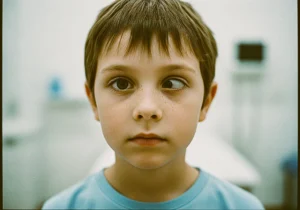
If you or your child have misaligned eyes that don’t point in the same direction, you may be dealing with a squint, medically known as strabismus. Whilst this condition can affect people of all ages, early intervention is crucial for the best outcomes. At The Eye Dr Clinic in West Yorkshire, Mr Mohamed Mohyudin, Consultant Ophthalmic Surgeon, specialises in squint surgery a highly effective procedure that can realign your eyes, improve vision, and restore confidence.
What Is a Squint (Strabismus)?
A squint is a condition where both eyes fail to look in the same direction simultaneously. Whilst one eye focuses straight ahead on an object, the other eye turns inward (esotropia), outward (exotropia), upward (hypertropia), or downward (hypotropia). This misalignment can be constant or intermittent, and may affect one or both eyes.
Squints are surprisingly common, affecting approximately one in 20 children, though they can also develop in adults. The condition isn’t merely a cosmetic concern it can significantly impact vision development in children and cause double vision, reduced depth perception, and psychological distress in both children and adults.
Common Symptoms of Squint
Recognising the signs of a squint early can help ensure timely treatment:
- Eyes that don’t move together or point in different directions
- One eye turning inward, outward, upward, or downward
- Tilting or turning the head to one side to see better
- Closing one eye in bright sunlight
- Double vision (more common in adults)
- Poor depth perception or difficulty judging distances
- Eye strain, headaches, or tired eyes
- Difficulty reading or focusing on objects
- Squinting or blinking frequently
In young children, an untreated squint can lead to amblyopia (lazy eye), where the brain starts ignoring signals from the misaligned eye, resulting in permanent vision loss if not addressed early.
What Causes Squints?
Understanding the causes of squints can help with prevention and early detection:
Muscle Imbalance:
The most common cause is an imbalance in the six muscles that control eye movement, preventing both eyes from working together properly.
Genetics:
A family history of squint significantly increases the risk, suggesting a hereditary component to the condition.
Refractive Errors:
Uncorrected vision problems such as long-sightedness (hyperopia) can cause the eyes to turn inward as they struggle to focus.
Neurological Conditions:
Conditions affecting the brain or nervous system, such as cerebral palsy or Down’s syndrome, can contribute to squint development.
Other Medical Conditions:
Thyroid eye disease, diabetes, and certain infections can lead to eye muscle problems and misalignment.
Trauma or Injury:
Head injuries or damage to the eye muscles can result in acquired squint.
Stroke:
Adults may develop squint following a stroke that affects the nerves controlling eye movement.
When Is Squint Surgery Necessary?
Not all squints require surgical intervention. Many cases, particularly in children, respond well to conservative treatments such as glasses, eye exercises, or patching therapy for lazy eye. However, squint surgery becomes necessary when:
- Non-surgical treatments have failed to correct the misalignment
- The squint is causing significant visual problems or double vision
- The misalignment is affecting quality of life, self-esteem, or social interactions
- The squint is large (typically more than 15-20 prism dioptres)
- Early surgical intervention is needed to prevent amblyopia in children
- The patient desires improved cosmetic appearance and eye alignment
Around 70-80% of patients achieve successful eye alignment after a single surgical procedure, with the remainder potentially requiring additional treatment.
The Squint Surgery Procedure
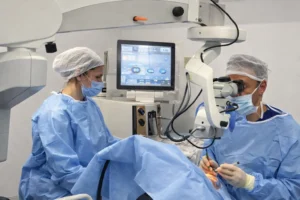
At The Eye Dr Clinic, Mr Mohyudin performs squint surgery as a day procedure, meaning you’ll go home the same day. The surgery typically takes 30-45 minutes per eye. Here’s what to expect:
Anaesthesia
Children and most adults undergo general anaesthetic, ensuring they are completely asleep and comfortable throughout the procedure. In some cases, adults may be offered local anaesthetic with sedation. Your anaesthetist will discuss the best option for you during your pre-operative assessment.
The Surgical Technique
Once you’re anaesthetised, Mr Mohyudin will clean the area around your eye with a disinfectant solution. A small instrument gently holds your eyelids open to provide clear access to the eye muscles.
The surgery involves making a small incision in the conjunctiva (the thin, transparent tissue covering the white of your eye) to expose the eye muscles. Contrary to popular belief, the eye is never removed during squint surgery all work is performed with the eye in its natural position.
Depending on the type and severity of your squint, Mr Mohyudin will either tighten or loosen one or more of the six extraocular muscles:
Muscle Tightening (Resection):
To strengthen a weak muscle, a small portion is removed, and the muscle is reattached to its original position on the eyeball, effectively shortening it.
Muscle Loosening (Recession):
To weaken an overactive muscle, it’s carefully detached from its current position and reattached further back on the eyeball, making it less effective.
The adjustments are calculated precisely based on measurements taken during your pre-operative examination. Once the muscles are repositioned, dissolvable stitches secure them in place. These stitches don’t need to be removed as they naturally dissolve over time.
Recovery and Aftercare
Recovery from squint surgery is generally straightforward, with most patients experiencing minimal discomfort:
Immediate Post-Operative Period
Your eye will be red and may feel sore or scratchy for the first few days, similar to having grit in your eye. This is completely normal and should improve within a week. You may also experience:
- Mild eye watering or discharge
- Sensitivity to bright light
- Slight swelling around the eye
- Pink or bloodshot appearance that may last several weeks
Medication and Care
Mr Mohyudin will prescribe antibiotic eye drops or ointment to prevent infection, along with anti-inflammatory drops to reduce swelling. Apply these as directed, typically three to four times daily for one to two weeks.
Activity Restrictions
Most people can return to work or school within one to two days, though you should avoid:
- Swimming for at least two weeks
- Contact sports for four weeks
- Rubbing or touching your eyes
- Heavy lifting or strenuous exercise for one week
- Wearing eye makeup for two weeks
Pain Management
Over-the-counter paracetamol or ibuprofen is usually sufficient to manage any discomfort. Applying a cold compress wrapped in a clean cloth for 10 minutes at a time can also help reduce swelling and soothe the eye.
Follow-Up Appointments
You’ll have follow-up appointments to monitor your healing and assess the surgical outcome. The full results of squint surgery may not be immediately apparent, as swelling can initially affect eye position. Final alignment is typically assessed six to eight weeks after surgery.
Benefits of Squint Surgery
Squint surgery offers numerous life-changing benefits:
Improved Eye Alignment:
The primary goal is to straighten the eyes so they work together properly and point in the same direction.
Enhanced Vision:
For children, early surgery can prevent amblyopia and preserve normal vision development. Adults may experience elimination of double vision and improved depth perception.
Psychological Benefits:
Studies demonstrate that squint surgery significantly improves self-esteem, reduces anxiety, and enhances social interactions, particularly for children and adolescents.
Better Quality of Life:
Properly aligned eyes improve your ability to perform daily tasks, from reading and driving to participating in sports and social activities.
Cosmetic Improvement:
The aesthetic improvement following squint surgery can be dramatic, helping patients feel more confident in their appearance.
Potential Risks and Complications
Whilst squint surgery is considered very safe, all surgical procedures carry some risks:
Common Side Effects:
- Temporary redness and irritation lasting several weeks
- Mild discomfort or scratchiness
- Sensitivity to light
- Temporary double vision as the eyes adjust
Rare Complications:
- Under-correction or over-correction requiring additional surgery (occurs in approximately 20-30% of cases)
- Persistent double vision (affects about 2% of patients)
- Infection (very rare with antibiotic treatment)
- Scarring of eye tissues
- Extremely rare: vision loss (1 in 20,000-30,000 cases)
Mr Mohyudin will discuss all potential risks during your consultation and answer any questions you may have.
Why Choose The Eye Dr Clinic for Squint Surgery?
Mr Mohamed Mohyudin (MBChB BSc MSc FRCOphth CCT) is a highly experienced Consultant Ophthalmic Surgeon registered with the General Medical Council. He brings specialist expertise in strabismus surgery, having performed numerous successful procedures for both children and adults.
At The Eye Dr Clinic in West Yorkshire, we combine state-of-the-art surgical facilities with a patient-centred approach. Mr Mohyudin takes time to thoroughly assess each patient, explain treatment options clearly, and develop personalised surgical plans to achieve optimal outcomes.
From your initial consultation through to post-operative care, you’ll receive expert guidance and compassionate support every step of the way.
Frequently Asked Questions About Squint Surgery
1. Is squint surgery painful?
No, squint surgery is not painful. The procedure is performed under general anaesthetic, so you won’t feel anything during surgery. Afterwards, you may experience mild soreness, scratchiness, or a gritty sensation that’s easily managed with paracetamol and typically resolves within a few days.
2.How long does recovery from squint surgery take?
Most patients recover quickly, returning to normal activities within one to two days. The eye’s red appearance may persist for several weeks, but this gradually fades. Complete healing takes approximately four to six weeks, though you’ll notice significant improvement much sooner.
3.Can a squint come back after surgery?
Whilst squint surgery is highly effective, there’s a possibility of the squint returning or over-correcting (approximately 20-30% may need additional adjustment). Regular follow-up appointments help monitor eye alignment, and if needed, further treatment can fine-tune the results for optimal outcomes.
4.What age is best for squint surgery?
Squint surgery can be performed at any age from four months onwards. For children, earlier intervention (typically between ages 2-6) often yields better results in preventing amblyopia and developing normal binocular vision. However, adults can also benefit significantly from squint surgery for both functional and cosmetic reasons.
5.Will squint surgery improve my child’s vision?
Squint surgery primarily corrects eye alignment rather than directly improving vision. However, by aligning the eyes, it can prevent or treat amblyopia (lazy eye) in children, which does preserve or improve vision. If amblyopia is present, patching therapy before or after surgery may be necessary to optimise visual outcomes.
Your Vision Matters to Us
Schedule your comprehensive eye examination today and discover how we can help you see the world more clearly.
Book Your Appointment Now
The Eye Dr Clinic offers expert squint surgery at Spire Healthcare in Elland, Halifax. Mr Mohamed Mohyudin, our experienced Consultant Ophthalmic Surgeon, is dedicated to correcting eye misalignment with precision and care. Contact us today to discuss your squint concerns and learn whether squint surgery is right for you or your child.